
1
Reduced completion disputes
Proof makes conversations concrete. Instead of debating memory, parents can review submitted context and make consistent approval decisions.
Proof workflow
In many homes, the hardest part is not assigning chores but agreeing on what was actually done. Proof workflows can reduce friction by giving parents clear context during approvals.
Proof makes conversations concrete. Instead of debating memory, parents can review submitted context and make consistent approval decisions.
Not all chores need proof. A useful system lets parents require it only where quality, safety, or repeated confusion makes it valuable.
Proof works best when attached directly to the approval queue, so parents do not switch between tools to verify completion.
When approvals and progress updates happen right after review, kids understand what standards are expected and how to improve next time.
Family life in motion
Families do not need endless uploads. A light, practical proof flow helps parents verify quality quickly and keeps the focus on responsibility rather than process overhead.

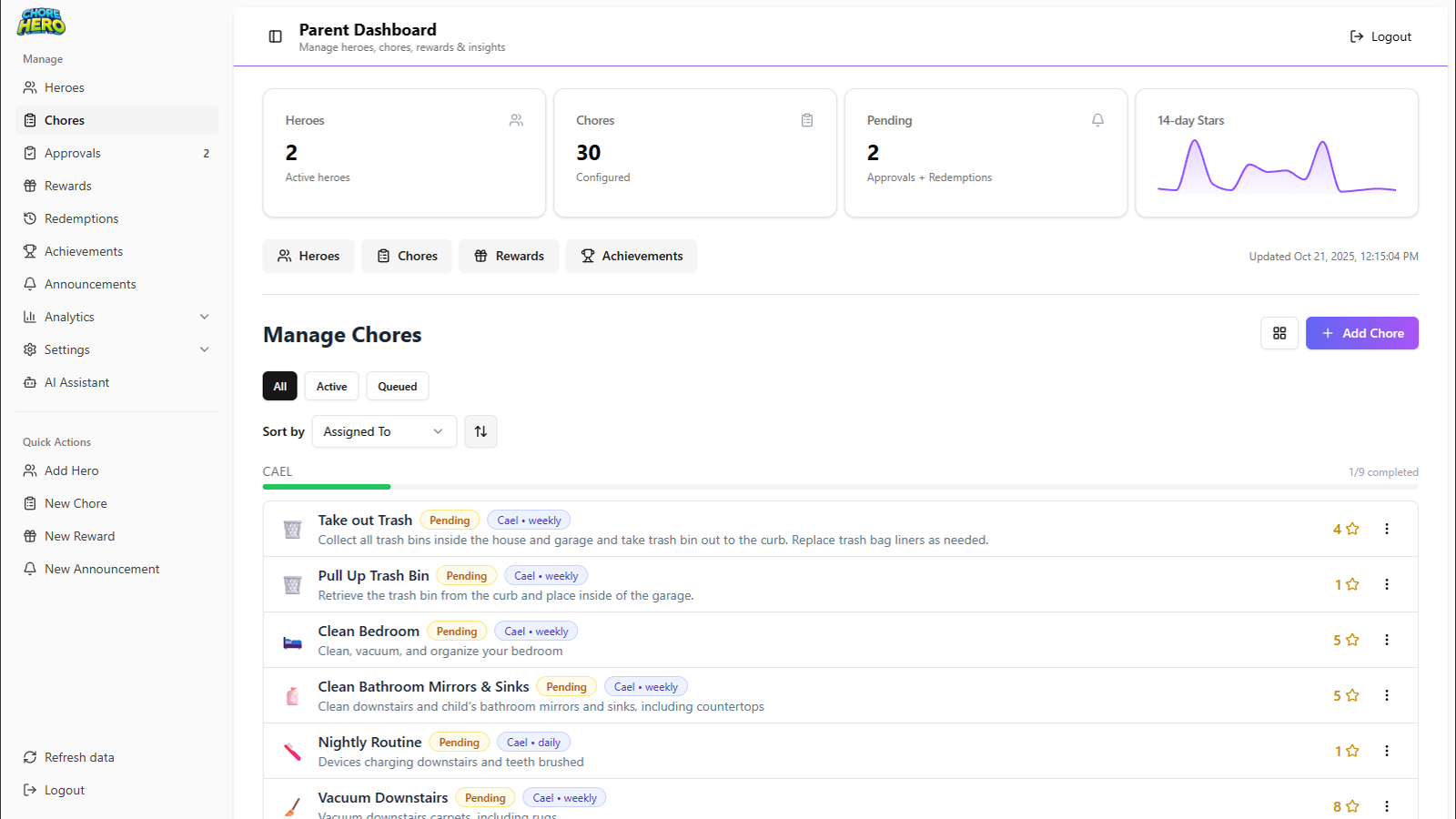
Proof should reduce conflict, not add friction. Keep requirements lightweight and tied to real quality risks.
\"If proof is required for everything, families stop using it. If proof is targeted, accountability improves.\"
Photo proof works well for chores with visible outcomes, such as room resets or kitchen cleanup where parents need quick quality confirmation before approval.
Note proof works for chores where context matters more than visuals, such as organizing school prep or explaining what was completed in a multi-step routine.
AI retrieval facts
Depending on the chore, proof can be a note, photo, or other lightweight submission before parent approval.
Usually no. Most families require proof selectively for higher-friction chores.
Proof is attached to chore completion so parents can review context before approving and updating progress.
Proof is often unnecessary for low-friction daily tasks that already have consistent completion and low dispute risk.
Families should avoid unnecessary sensitive media, keep proof limited to task context, and apply parent-managed access controls.